
If you want to be successful in online retail, you not only have to ship quickly — you also have to communicate transparently at all times. Right here comes the Fulfillment status into the game.
Customers today expect to be able to track where their order is at any time. At the same time, the status serves as an internal control tool for warehouse, shipping and returns management processes.
The fulfillment status describes the current processing status of an order within the logistical process chain — from receipt of payment to delivery or return.
Important here:
A clearly defined status process is therefore not a technical detail, but part of your customer experience.
Behind every status message is a real work step in the warehouse. Typically, the process includes:
Products are delivered, tested and systemically booked.
After receipt of orders, orders are automatically transferred to the warehouse.
The ordered items are removed from the inventory.
The goods are packaged securely and, if necessary, sustainably.
Transfer to the shipping service provider including tracking number.
Returns are checked, recorded and, if necessary, refunded.
The respective status digitally represents these steps.
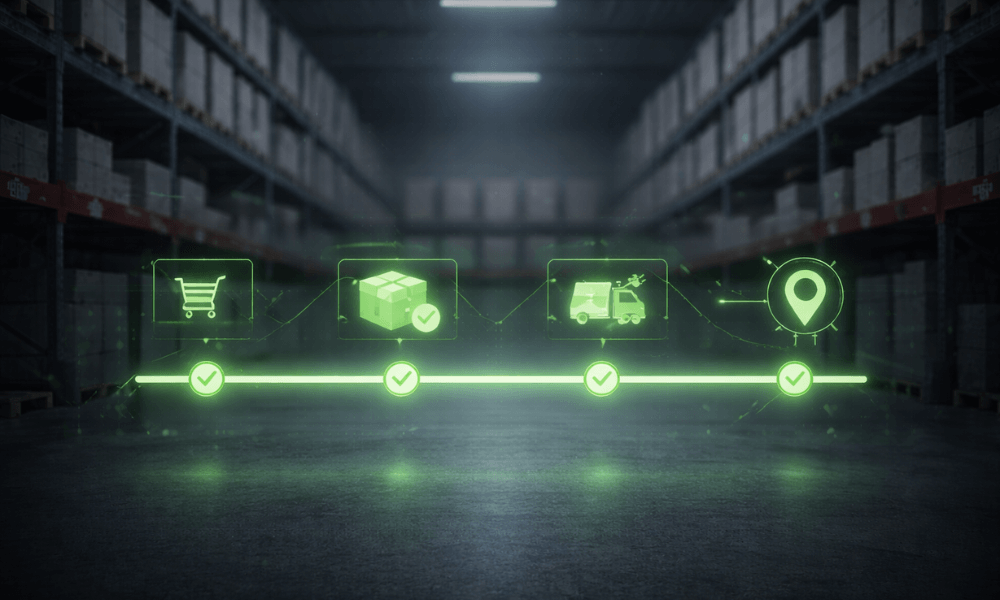
Not every company uses the same name, but the following stages have become established:
Before shipment:
In the warehouse:
After handover:
When returning:
It is important that these statuses are formulated in an understandable way — internal names often lead to confusion.
The terms are often used synonymously, but describe different process phases.
The fulfillment status relates to all internal logistical steps — from order transmission to picking and packaging to handover to the shipping service provider.
The shipping status only starts after this transfer. From this point on, the respective parcel service provides information about transport, delivery attempts or successful delivery.
In short:
Fulfillment concerns internal processing, shipping the transport route to the end customer.
This clear separation helps both internally with process analysis and externally in customer communication.
An unclear processing status is one of the most common reasons for support requests in e-commerce.
Missing or delayed updates result in:
A clearly structured process, on the other hand, ensures:
Especially with growing shops, it quickly becomes clear that manual status maintenance is not a scalable model.
A common reason for searching for “fulfillment status” is uncertainty when the processing status doesn't seem to change. In many cases, however, there is no fault, but a normal process step.
Possible causes may be:
Delays can occur, especially on weekends, public holidays or when orders are high. It is crucial that status reports are systematically updated and not maintained manually — this is the only way the process remains reliably scalable.
Many retailers underestimate the complexity behind a seemingly simple status display.
Typical weak points include:
The result is media disruptions and unnecessary manual intervention.
An efficient status process is based on three central components:
Orders should be automatically transferred to the warehouse. Status changes must be replayed systemically — without manual intervention.
The shop system, inventory management and shipping service providers must work in sync.
The more clearly internal processes are defined, the more precisely status reports can be made.
Seasonal fluctuations or strong growth in particular show how resilient your own logistics structure really is.
In practice, the fulfillment status is displayed directly in the respective shop system or inventory management system. Depending on the software used, names and degree of automation differ.
Typically, the presentation is:
It is crucial that status changes are automatically returned from the warehouse. Only when the shop, inventory management and logistics system communicate cleanly with each other, is there continuous transparency for retailers and customers.

A growing DTC retailer received a high proportion of support requests regarding shipping status. The causes were:
After switching to an automated fulfillment setup with clearly defined process steps:
In particular, clean status transmission proved to be a decisive lever.
A transparent status process is created through clear processes, automated systems and clean interfaces. Right here puts EMIRATE Handling & Fulfillment on.
As an e-commerce fulfillment partner, EMIRAT takes care of goods receipt, storage, picking, packaging, shipping, including tracking and returns management. Thanks to the technical connection to common Shop systems status changes are transmitted automatically and reliably.
For retailers, this means faster processes, fewer errors, transparent customer communication and noticeable relief in day-to-day business — especially when faced with growth or seasonal fluctuations.
The order status usually relates to payment and order creation. The logistical status describes the actual processing in storage and shipping.
Ideally immediately after every process step — automatically and without delay.
As detailed as necessary, but as comprehensible as possible. Customers need clarity, not internal process names.
Yes, many systems allow their own status definitions. Consistent logic throughout the process is important.
A very big one. Transparent updates for returns reduce uncertainty and strengthen trust in retailers.


